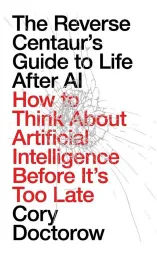
Review
Like Cory’s last book I had read Enshittification, I knew most about what this book would entail. There was nothing new (for me). As Cory mentions in the Acknowledgement section - ‘This books was written on my website pluralistic.net’.
I have read Cory talk about these ideas on pluralistic. But on the blog, there are many other ideas and things he writes about. I appreciated having the book in my hand, a single place with all the things related to the current AI environment, one may need to know.
You may or may not agree with whatever Cory says. You may agree with most of it, but disagree with a certain percentage of it. I agree with most of it, though I’m not sure that OpenAI and Anthropic will crash and burn. Maybe, maybe not. We shall see.
I enjoyed it thoroughly and people who don’t follow Cory, should read the book.
Notes
There is nothing illegal about training LLMs, based on current law. Though the laws are things that we made up, so we can change them, if we want. LLMs are built in three steps - scraping large amounts of data (how you collect the data, may be criminal in certain cases like Anthropic to pay $1.5 billion to authors in landmark AI settlement), but otherwise it comes under fair use. The next step is converting that data into tokens etc. and publishing that as software. The final step is whatever the AI models create - which is all public domain, so does not have any copyright whatsoever.
LLM code generators are like slot-machines. You may keep prompting it and it may eventually work. But you will not remember all the times it did not work. You will remember just the 10 minutes spent with the last prompt.
The sections about why this bubble exists - basically companies want to be high growth companies forever, so they need to show they can grow in new ways. Why? Because high P/E ratio for a companies means they can basically print their own money - pay in stocks, buy companies, hire bright minds and pay them in stock. Which is why Google tried to put Google+ everywhere. And Meta did Metaverse. It failed. But it gave time to Zuck to find his next growth engine - AI. People, us consumers, don’t matter. We are not the target of these announcements or directions the companies take. The Wall Street is.
And finally the section about what comes after the bubble pops was interesting too. The things that will remain will be the small models that can run on our devices. And the DCs will remain but with old hardware, quite unlike the dot com bubble. And people with skills. Though also negative stuff - like so much carbon in the atmosphere - which will remain with us for generations.
Paths into this note
2 notes lead here
-
I had a problem with that. Perhaps because I recently read The Reverse Centaur’s Guide to Life After AI. Or, perhaps because the last talk talked about ownership and whose responsibility is it when AI agent pushes code with vulnerabilities in prod. Spoiler - it’s the org, it’s you.
-
I finished reading The Reverse Centaur’s Guide to Life After AI today. Like Cory's last book I had read - Enshittification - I knew most of what this book would entail. There was nothing new (for me). As Cory mentions in the Acknowledgement section - "This books was written on my website pluralistic.net".